

Walmart founder Sam Walton flew his own airplane over cornfields to scout the next store location himself. One of the richest men in the world, Walton was notorious to haggle over the price of office supplies.
So in 1987 when Walmart completed the largest private satellite network in the world, the man was sweating the $24 million price tag ($70.4 million today).
The satellites linked every store to the Bentonville HQ and looked like a terrible call when the buggy system’s payoff wasn’t visible in any quarter.
Suddenly, the satellite network made it possible to compile same day sales data from every store. The supplier partnerships boomed, and Walmart knocked Kmart out of the retail game forever.
The invisible infrastructure to make this possible arrived years before the benefits, and led Walmart to retail dominance. The same thing is happening in 2026.
Sparky?
Walmart went all-in on AI agents.
They actually call them “super agents”, which causes the internet’s collective eyes to roll. BUT in typical Walmart fashion, they do not take emerging tech investment lightly.
This became vivid on the August, 2026 Walmart earnings call, when CEO John Furner tells us Walmart’s super agent “Sparky” has seen usage rise 70% year over year.
You might be thinking how trivial this is considering the proliferation of AI generally. Everyone is using ChatGPT, so who cares that Walmart has AI tools you can access on their app?
But Furner went on to drop some data that made the AI bears recoil, saying customers who use Sparky spend 40% more per order at Walmart. Everyone’s minds are blown by this considering the amount of people preaching doom on AI spend.
The evidence for what that AI money actually did comes later in the same call, when Rainey reaches SG&A and says Walmart leveraged wages in the quarter.
He is using a term that retail accountants love to confuse the masses with. In plain terms: payroll grew slower than sales.
Walmart’s labor as a percentage of revenue fell, which is an incredible byproduct of employees in the stores wielding AI tools that Walmart already bought. Supply chain automation also streamlines the flow of inventory into stores as well, showing boosts to this same wage leverage Rainey mentioned.
The catch comes in the next part, when Rainey says higher depreciation on that same capital expenditure, along with rising self-insurance costs for Walmart, more than offset the wage benefits they gained. Depreciation grew 12.6% in a quarter when sales only grew 5.9%, showing how depreciation can take a toll in the short term.
While Sparky is leading to higher spend by customers that is correlational in nature, it shows that consumers are getting benefit from AI agents in a retail environment.
The deeper discussion on leveraging wages is the way in which Walmart will eventually see major ROI from AI spend. This quarter it didn’t work in Walmart’s favor, but don’t have an anti AI crash out yet.
The same workforce absorbing $100 billion of additional revenue since FY23 will be the main payoff, rather than what everyone else assumed would happen when AI proliferates throughout the organization.
We have a narrative violation, as people thought savings would come through AI causing headcount reduction through layoffs, but this just isn’t playing out. Further, the depreciation point by Rainey tells us the equipment enabling this AI transformation costs more right now than the labor efficiency is worth.
We are at the not so fun part of the investment j-curve where things look grim, but Walmart is making huge bets on AI. While the automation made Walmart more efficient and less profitable than they could have been at the same time, they are also starting to win with AI investment. This is just step one.
We should ask what foundations Walmart had to build before gen AI could do anything useful for their business, customers, and shareholders and how can we use these foundations to propel our own companies forward in 2026?
The Golden Foundation
Walmart’s Sparky is an agentic interface living on top of an inventory system that already has a brilliant organizational design.
This infrastructure enabled Sparky to know where things are located, and this is the win for consumers. The CEO’s Sparky anecdote from the earnings call proves this when he shows how a customer asked Sparky for a high-protein meal plan.
Going above and beyond what a normal LLM like ChatGPT would have been able to deliver, Walmart’s Sparky builds the components of a meal plan with its agentic capabilities in the Walmart shopping cart. Sparky accomplishes this with a “one click add” for each of the ingredients that saves the user from having to find all of the items themselves.
It does this while skipping ingredients the customer has recently purchased both in store and online because it knows they are irrelevant. While frontier AI models could build meal plans for years, Sparky uses a foundational layer of infrastructure to actually help the customer navigate online and lower the time to checkout.
What consumed nearly 10 years of effort for teams at Walmart is laying underneath the agentic AI layer of Sparky, and these are systems that allow the AI agent to deliver something invaluable to the customer rather than just be pure hype for investors.
For its novel features, Sparky grabs the reins of the unified transaction data across channels, products, and real-time availability of the ingredients the customer would need for their meal plan.
This was just one example in the earnings call of how the play to combine infrastructure + the AI layer is the star for how we ascend in deploying AI.
Here are two more:
3,100 US Walmart retail locations now use some level of automated freight handling systems, boosting supply chain efficiency to new levels.
Over 50% of e-commerce fulfillment is flowing through automated facilities where AI helps workers get customers their shipments faster.
The supply chain layer underneath didn’t just spawn overnight. For example, Walmart has been forecasting for their supply chains on a multi-horizon recurrent neural network built by their own engineers for years. It’s a system that predicts several time distances simultaneously, because different decisions with your supply chain will have different lead times and leadership MUST be able to see this clearly.
They also employ a digital twin as a simulation of the physical network of their supply chains and no this isn’t a weird AI clone that lives in the cloud. This digital twin is like a flight simulator sandbox with stores, distribution centers, trucks, and inventory that lets Walmart test changes before implementation (drive it like they stole it).
They also apply intelligent computer vision on the task of inbound quality checks, so cameras inspect produce as it comes off the truck.
The purpose of this tech is grading freshness on perishable goods and catching damage that is too time consuming for humans to perform. Image classification of this caliber has been viable since about 2016 in receiving environments, so the infrastructure has been marinating for a while.
The supply chain automation technologies noted here predate ChatGPT by nearly a decade or more. This hits hard because most of what people credit to Walmart’s gen AI investment is actually classical machine learning. This confusion happens a ton in 2026.
The thing to remember is that gen AI is the routing and interface layer on top that gives customers access to everything Walmart has been building for years in relative silence.
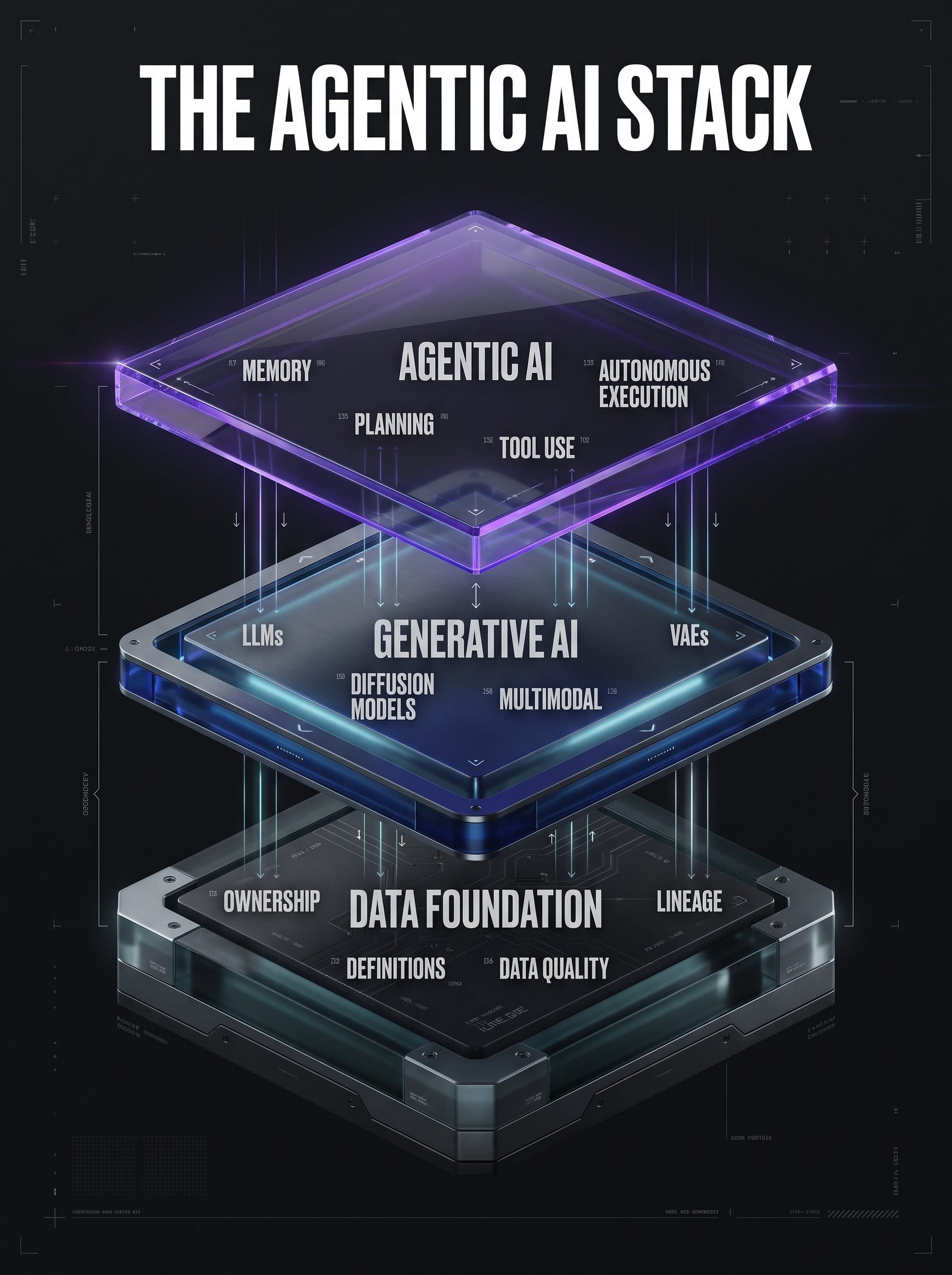
When a customer asks Sparky for a week of high-protein dinners and it skips the ingredients they already bought, the language model handles the dialogue as the most futuristic interface we currently have.
Every fact underneath comes from the forecasting, inventory, and transaction systems that took 10+ years to build when the engineers were in monk mode.
This is the advantage that legacy companies need to be giving themselves before they dive head first into agentic AI offerings for their customers. Plant today.
Are We Just Renting The Front Door Now?
Distribution through someone else’s interface is fine, while transactions and customer data through someone else’s rails is not going to work out long-term because you don’t own the most valuable part. Walmart proved this in 2026.
Back in October 2025, Walmart and OpenAI announce an Instant Checkout feature inside ChatGPT which blows everyone’s minds at the time. However, by March 2026, Walmart scraps the idea and makes new plans.
The real power implementation is Sparky itself embedded inside ChatGPT, where customers authenticate first with their Walmart account. Amazingly, their shopping carts then sync across the app and site, and payment runs through Walmart’s own checkout system.
According to Daniel Danker, Executive VP of AI Acceleration, Product, and Design at Walmart, the mission of this implementation is to ensure shopping can start anywhere that customers get the urge to buy through research, and the Walmart experience stays the same.
The distribution layer does the heavy lifting, as Danker says ChatGPT alone brings Walmart new customers at about twice the rate of traditional search engines. This is likely because ChatGPT’s users skew away from Walmart’s typical shopper and they are capturing entirely new segments.
The transaction layer is what failed for the mission and caused Walmart to pivot, because they had a sudden enlightenment where they realized the transaction layer is king.
Walmart starts this fail by putting around 200,000 products into OpenAI’s Instant Checkout system starting in November of 2025, so people can purchase popular products without even leaving the chat.
This doesn’t work as Danker told WIRED that purchases converted inside of ChatGPT are three times lower than letting the same shoppers launch to Walmart’s own site for checkout. The fix is to stop outsourcing the transaction to OpenAI ‘s platform and risking the loss of sales while keeping the ChatGPT distribution channel open to bring in new customers now that traditional search engines are on the way out.
Every legacy company is about to face a version of this with the proliferation of customers using LLMs for search, and operators need to be ready. Walmart’s data on the distribution side is too enticing.
When a vendor offers to build out your product catalog, your quoting system, or your booking process inside their assistant, be ready with this viewpoint from Walmart. Let the vendor handle the distribution channel while your teams keep the account, the transaction, and the records for you to leverage on your own.
One Platform, Many AI Models, and A Few Good Agents
It is evident that the real scarce asset is a governed place to plug in LLMs, plus the rare discipline to know how many good interfaces you ship.
By a place to plug in, we are talking about Walmart’s Element.
This is Walmart’s internal multi-cloud platform that allows teams to connect to multiple managed LLMs safely. This platform even routes to the models by cost and performance, and carries the security review and governance layer Walmart needs in order to let employees loose on LLMs without risk of doom.
Walmart’s Global CTO Suresh Kumar said to IT Brew this June that the way to drive governance is to just lock in and build it (into the tool).
To follow this mission, Walmart bizarrely names a tool called Code Puppy. This is because it is an internal vibe-coding system that lets all types of employees build software tools. However, it only talks to LLMs that Element has already vetted before allowing teams to go insane vibe-coding slop on just any models out there.
The result Kumar reports is that Walmart now has roughly as many non-technical employees building things as it has engineers, boosting their coding workforce from prior years before vibe-coding was possible.
Next, consolidation is also important in this context. People might think of Walmart as this legacy company that moves slow, but even by mid-2025 Walmart has 200-plus agents in use across its business divisions. They deploy so many agents they build another tool called Wibey to coordinate them internally without spiraling.
The most impressive part of this endeavor is that Walmart builds a small set of super agents based on the intended audience for each. Sparky was built for customers as we already mentioned, but they also made Marty for sellers and advertisers, plus one for associates, and one for developers to manage their respective domains.
Depending on the force of your company, you probably cannot build Element tomorrow, and you don’t even need to. The part for operators in legacy businesses to remember is the shape: you just need one approved way to reach AI that is safe and effective.
In order to accomplish this, you need one person who owns the system, and a limit on how many AI assistants and tools that employees are asked to study (this is where people jet).
Most companies fail the second one, because every department buys its own tools, causing total chaos that easily could have plagued Walmart if they didn’t think so precisely about AI implementation.
The Real Score Card to Consider
This is where we see Walmart’s real AI metrics come alive as P&L lines on the statement, and the impressive ones have some serious caveats we will discuss.
As we address, the fact that customers who use Sparky order 40% more per checkout is correlational, but still cool. Sparky users self-select, and they are already serial app-native shoppers who are Walmart super fans.
The interesting part is that number is just 35% two quarters ago and jumps to 40%, which could mean either the Sparky product improves or the user dataset changes. So how do we know an AI tool that we invest in heavily actually changes anything if all we see is correlation for the 40% figure?
When we dive into investigating a major change like this we look for contrast.
Walmart’s engineers already know how to answer, because they run the tests properly one layer down to get an accurate reading (copy this playbook). A Walmart Global Tech paper published last year describes a two-week A/B test of a new search ranker on Walmart’s website.
The engineers split website traffic, run the test, and measure add-to-cart rate per each shopping session rising 0.8% total. The change is small, but after this test they know the tool causes it, because the only difference between the two groups is the tool being available.
In the end Walmart beat expectations and the stock still drops about 9% after the reports hit the media, because investors see US comparable sales come in at 2.6% against consensus near 3.5% to 3.8%.
A feel good AI story about Sparky and AI agent implementation does not move the stock price as much as people might expect in the “AI bubble”. The quarter is just soft, even with AI glow added.
For operators inside of legacy companies, this means you need to look at AI spend against a line finance already tracks so that you actually get eyeballs on your returns. This means labor as a percentage of revenue, rework hours, or even cycle time from request to delivery so that you know what is truly impacting your service.
Just measuring adoption rates and license counts inside of your organization are activity metrics that will get your project shot down. Fixating on adoption is what gets an AI program axed after two years because nobody cares about how many people are using an AI tool if it doesn’t influence P&L lines.
Your team also needs to run some kind of control group, however crude, so you have meaningful data to prove what you’re building is worth it, just like Walmart engineers do for Sparky.
The Hunt For Next March
We just spent paragraphs proving Walmart’s AI story is uncommon because it can be fully tested and graded by the outside observer, while also leading us to know how to lock in this year and deploy agents ourselves in an enterprise environment. Focus on the foundation layers as the primary.
We also realize that most of what legacy companies say about AI implementation on their earnings calls in 2026 is unfalsifiable by nature, which is why they yap about it so much to influence investors without much worry of analysis.
The future 10-Ks for Walmart will state a total associate count, which will give us the ammo to evaluate their AI implementation success and whether the current trends continue.
These future quarterly filings will say whether operating expenses levered or became deleveraged and none of this can be buried in hype language. Maybe it’s data like this that will implode the alleged “AI bubble” so many claim to be rising.
BUT If total associate headcount at Walmart stays near 2.1 million while revenue keeps climbing by next March, and labor productivity keeps going up, the mechanism could be real and the mission blueprint is worth taking for your own organization.
Keep building the foundation either way.
Works Cited
“AI Shopping: Walmart and Gap Split over ChatGPT and Gemini Checkout.” Axios, 24 Mar. 2026, www.axios.com/2026/03/24/ai-shopping-walmart-gap-chatgpt-gemini-checkout.
“Before the Storm: Walmart Supply Chain Technology Helps Teams Prepare for Severe Weather.” Walmart Global Tech, June 2026, tech.walmart.com/content/walmart-global-tech/en_us/blog/post/before-the-storm-walmart-supply-chain-technology-helps-teams-prepare-for-severe-weather.html.
“4 Ways Walmart Is Scaling AI to Unify Its Supply Chain.” Supply Chain Dive, www.supplychaindive.com/news/4-walmart-supply-chain-ai-uses/760891/.
“From Models to Agents.” Walmart Global Tech, public.walmart.com/content/walmart-global-tech/en_us/blog/post/wibey-announcement.html.
“How Walmart Is Securing a New Cohort of AI Builders.” IT Brew, June 2026, www.itbrew.com/stories/how-walmart-is-securing-a-new-cohort-of-ai-builders.
Kumar, Suresh. “All in on Agents.” Walmart Global Tech, 24 July 2025, tech.walmart.com/content/walmart-global-tech/en_us/blog/post/all-in-on-agents.html.
Shang, Hongwei, et al. “Knowledge Distillation for Enhancing Walmart E-commerce Search Relevance Using Large Language Models.” Companion Proceedings of the ACM on Web Conference 2025, Association for Computing Machinery, 2025, pp. 449–57, doi.org/10.1145/3701716.3715242.
“Walmart and OpenAI Are Shaking Up Their Agentic Shopping Deal.” Wired, 18 Mar. 2026, www.wired.com/story/ai-lab-walmart-openai-shaking-up-agentic-shopping-deal/.
“Walmart Bets on AI and Digital Twins to Shape Its Supply Chain Strategy.” Retail Dive, July 2026, www.retaildive.com/news/walmart-supply-chain-strategy-ai-digital-twins/825162/.
“Walmart CEO: AI Is ‘Literally Going to Change Every Job.’” CNBC, 29 Sept. 2025, www.cnbc.com/2025/09/29/walmart-ceo-ai-is-literally-going-to-change-every-job.html.
Walmart Inc. Annual Report (Form 10-K) for the Fiscal Year Ended 31 January 2026. U.S. Securities and Exchange Commission, 13 Mar. 2026, www.sec.gov/Archives/edgar/data/104169/000010416926000055/wmt-20260131.htm.
Walmart Inc. Current Report (Form 8-K): Chief Executive Officer Succession Announcement. U.S. Securities and Exchange Commission, 14 Nov. 2025, www.sec.gov/Archives/edgar/data/104169/000010416925000172/pressrelease111425.htm.
Walmart Inc. Current Report (Form 8-K), Exhibit 99.1: Second Quarter Fiscal 2027 Earnings Release. U.S. Securities and Exchange Commission, 20 Aug. 2026, www.sec.gov/Archives/edgar/data/104169/000010416926000145/earningsreleasefy27q2.htm.
Walmart Inc. Current Report (Form 8-K), Exhibit 99.2: Second Quarter Fiscal 2027 Financial Presentation. U.S. Securities and Exchange Commission, 20 Aug. 2026, www.sec.gov/Archives/edgar/data/0000104169/000010416926000145/earningspresentationfy27.htm.
“Walmart Reveals Plan for Scaling Artificial Intelligence, Generative AI, Augmented Reality and Immersive Commerce Experiences.” Walmart Corporate Newsroom, 9 Oct. 2024, corporate.walmart.com/news/2024/10/09/walmart-reveals-plan-for-scaling-artificial-intelligence-generative-ai-augmented-reality-and-immersive-commerce-experiences.
“Walmart’s AI Assistant Sparky and Customer Spending.” Moneywise, Aug. 2026, moneywise.com/news/top-stories/walmart-ai-assistant-sparky-customer-spending.
“Walmart Sees Speed, Convenience Boosting Trust in AI Agent.” Retail Dive, www.retaildive.com/news/walmart-sees-speed-convenience-boosting-trust-ai-agent/813111/.
“Walmart (WMT) Q2 2027 Earnings Call Transcript.” The Motley Fool, 27 Aug. 2026, www.fool.com/earnings/call-transcripts/2026/08/27/walmart-wmt-q2-2027-earnings-call-transcript/.